


Small Batch Locally Roasted Coffee
Shop Our Current Roasts
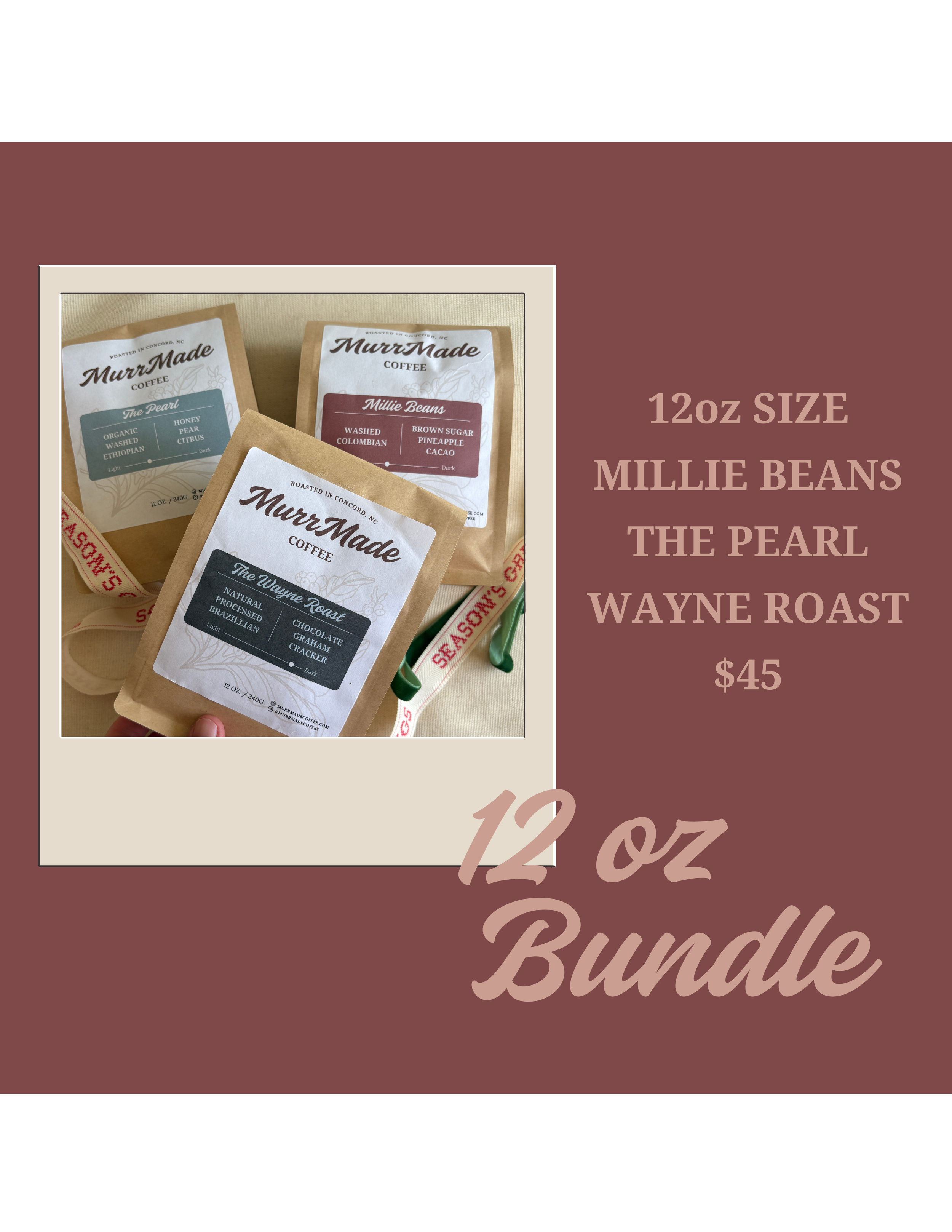
What is included:
1 Bag 12 oz Millie Beans
1 Bag 12 oz The Pearl
1 Bag 12 oz Wayne Roast
The perfect gift for your coffee loving friends and family. This package includes a 12 oz bag of our 3 most popular beans. Millie Beans, The Pearl and Wayne Roast.
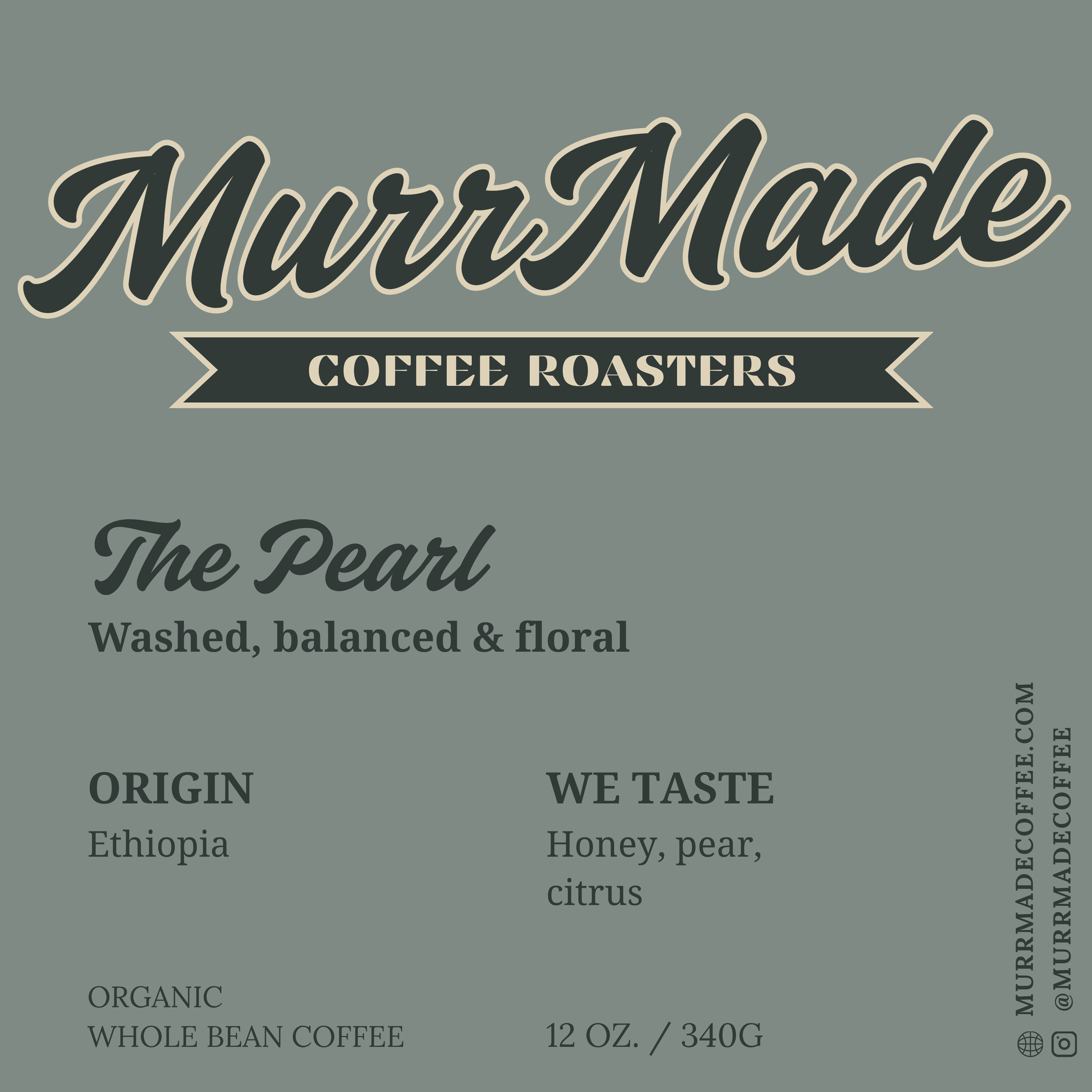
Tasting Notes: Fruity, Lime, Citrus, Herbal, Floral, Chocolate
Process: Washed
This bright Ethiopian coffee from Benti Neka is rare in being certified organic. While most Ethiopian farmers naturally practice organic farming, few pursue the formal certification process.
Benti Neka, situated in West Guji, is a washing station specializing in washed coffee. Ripe, sorted cherries from farms at elevations of 1,900 to 2,200 masl are pulped in a disc pulper and fermented in cement tanks for 36 to 48 hours to remove mucilage. The pulped coffee is dried for seven to nine days. Once the parchment coffee reaches a moisture content of 10-12%, it is stored in labeled conditioning bins until ready for the dry mill.
Washed processing is widely popular as it allows the terroir of the coffee to shine through. This method highlights the growing conditions, region, and true character of the coffee. At Benti Neka, producers achieve a clean, bright cup profile like this G2 Ethiopian coffee with notes of honey, lemon & lime, and pear, and a tea-like character in its light body.
Traceability is a key focus at Benti Neka, where a voucher system is used to track each coffee lot throughout the production chain. This system ensures that every step, from the receiving station to the drying stage, is documented, tying the coffee back to the farmers who produced it.
We purchase the raw coffee beans from a reputable company called Genuine Origin. Once we receive the raw beans, they are then roasted to a light-medium (City Plus) roast at our home roastery and packaged up to be distributed to our customers.
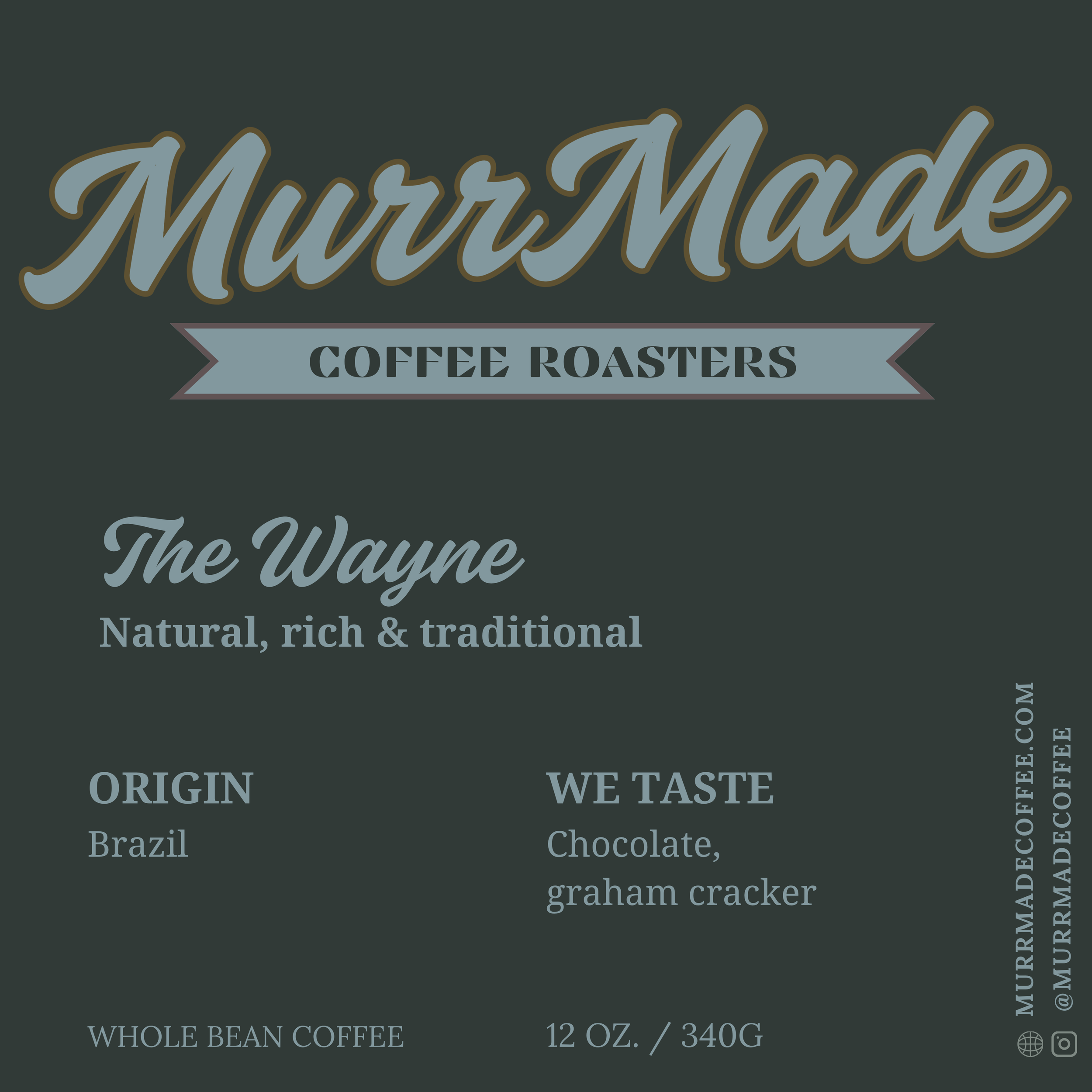
Tasting Notes: Chocolate, Graham Cracker
Process: Natural
Mata de Minas Region
Minas Gerais alone produces more coffee as a region than any other country in the world, at around 30 million 60-kg bags per year. The region accounts for nearly half of Brazil’s total production. Minas Gerais is often broken up into sub-regions, with some of the most renowned including Sul de Minas, Cerrado de Minas, Chapada de Minas, and Mata de Minas, where this pulped natural coffee comes from. Mata de Minas is warm and humid, with large variations in elevation. Most farms here are a modest size (by Brazil standards), with 80% smaller than 20 hectares.
Pulped Natural Coffee (Cereja Descascado)
Brazil is a major producer of pulped natural coffee, known locally as, cereja descascado. This process has long been a part of Brazilian coffee production methods, but gained commercial traction after the dissolution of the Brazilian Coffee Institute (IBC) in 1990, which deregulated the market and opened it to fresh investments.
Motivated to stand out, Brazilian farmers began to enhance their quality and post-harvest methods, increasing both their coffee’s value and their market competitiveness. In the pulped natural process, ripe cherries are sorted, partially de-pulped to retain a thin layer of mucilage, and dried to optimal moisture, followed by a resting period to stabilize flavor and quality.
About Brazilian Coffee
Brazil’s coffee story kicked off in 1727 with Arabica seeds smuggled from French Guiana, and within a century, it became the world’s leading coffee producer. Coffee fueled Brazil’s economy, dominated by agrarian oligarchs who drove production and exports, especially from São Paulo.
The abolition of slavery in 1888 brought waves of immigrants to coffee-growing regions, propelling Brazil’s coffee output to 80% of global supply by the 1920s. Though other countries have since increased their exports, Brazil still provides over 33% of the world’s coffee and consumes 20 million bags domestically, with a supply chain that generates more than 8 million jobs – proof of just how important coffee is to life in Brazil and how important Brazil is to coffee drinkers around the world. Read more in our Brazilian Coffee Origin Report
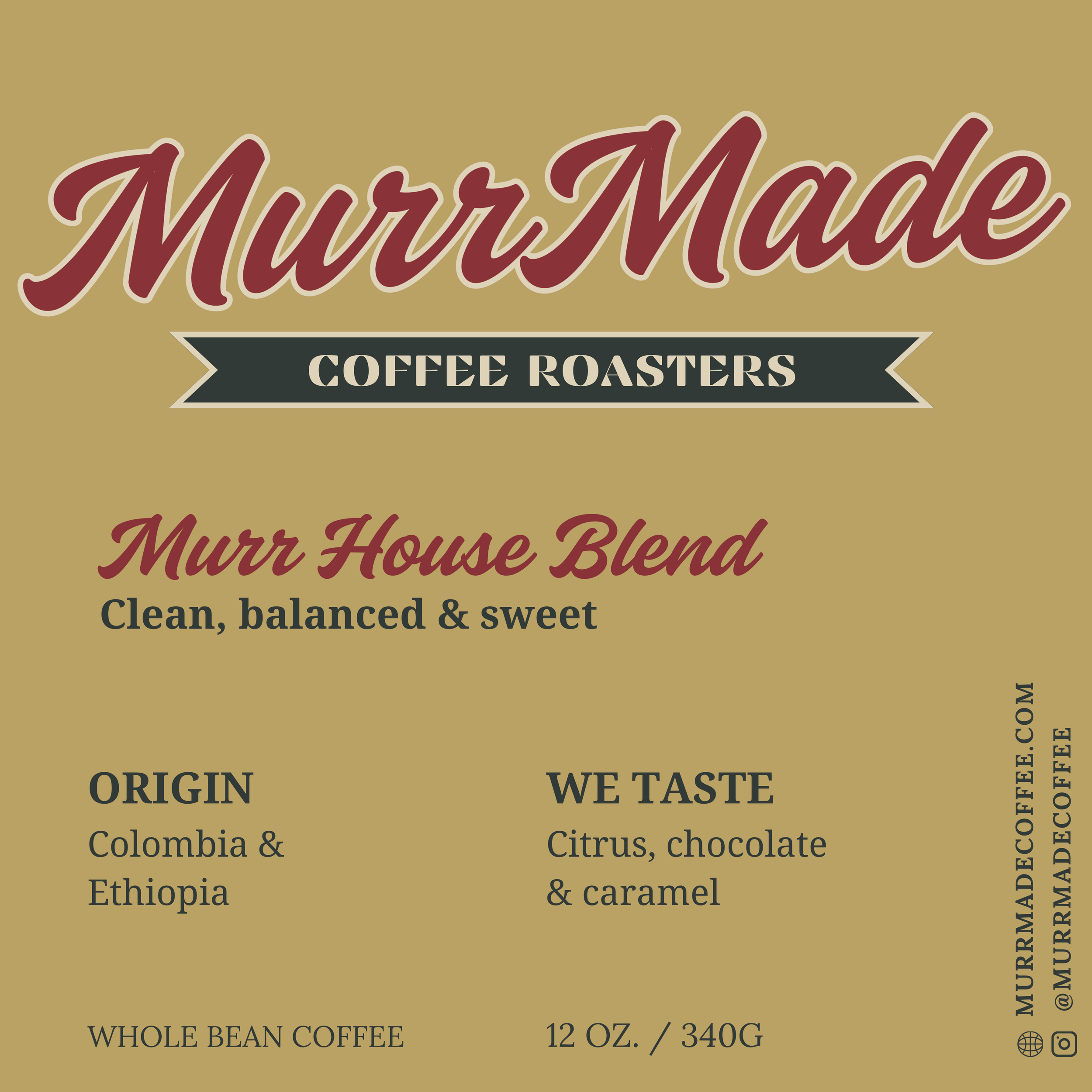
Tasting Notes: Citrus, Caramel, Chocolate
Origin: Colombia and Ethiopia
The Murr House blend is our favorite coffee and is perfect for drip, espresso and pour overs! This is our best all around and a fan favorite. If you are new to coffee or not sure what to try first, we recommend starting here.
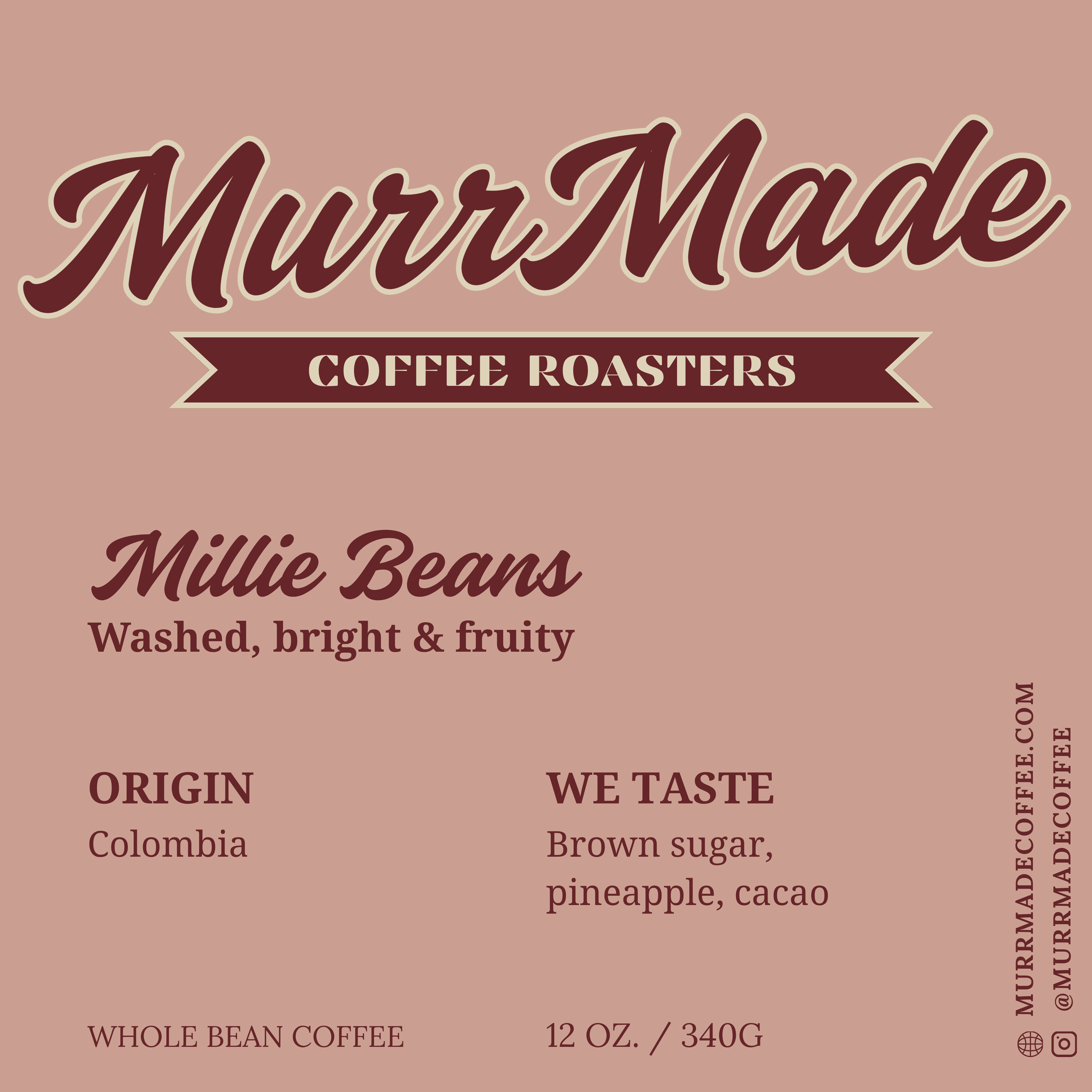
Tasting Notes: Cacao, Pineapple, Brown Sugar, Hibiscus
Process: Washed
Over half a million families dedicate their livelihoods to producing unroasted Colombia green coffee on small farms that dot the country’s volcanic mountain ranges. As the world’s third-largest producing country, the volume, quality, and variety that comes out of Colombia year-round is staggering. Coffee from Colombia is never dull, and with 16 coffee-producing regions along three mountain ranges and two harvests each year, Colombia always has fresh coffee on hand.
Juan Tama, the company who produced these beans, is a pioneering organization of indigenous communities in the municipality of Inza in the Cauca department. Founded in 2008, the association encompasses 600 family farms with an estimated production of between 10000 - 13000 bags of Excelso green coffee beans. The association is dedicated to increasing organic and biodiverse food production and food autonomy with the goal of helping its member families enjoy prosperity
Juan Tama provides farm assistance to its members in the form micro-loans and agronomic assistance such as crop management, in-farm processing, and organic farm management.
We purchase the raw coffee beans from a reputable company called Genuine Origin. Once we receive the raw beans, they are then roasted to a light (City) roast at our home roastery and packaged up to be distributed to our customers.
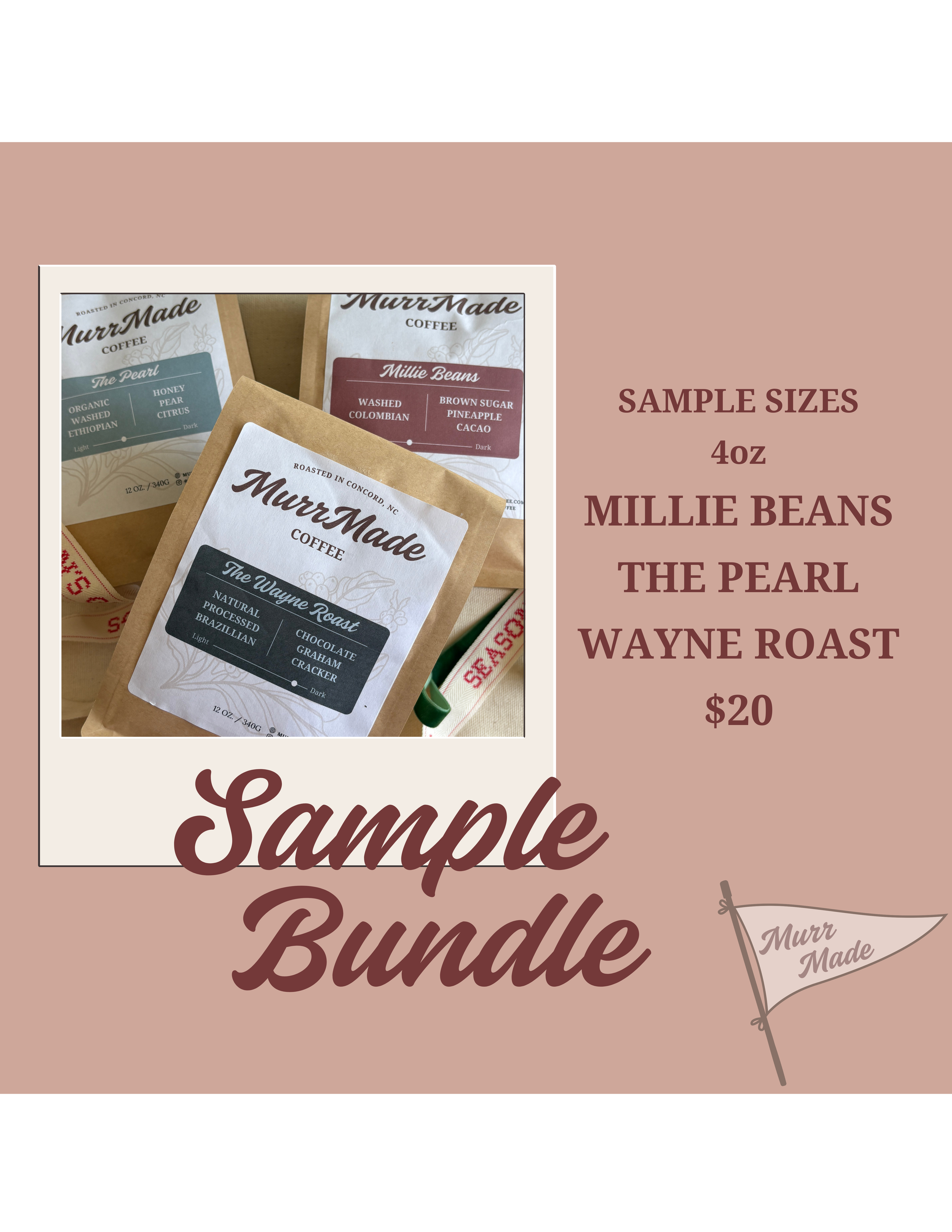
What is included:
1 Bag 4 oz Millie Beans
1 Bag 4 oz The Pearl
1 Bag 4 oz Wayne Roast
Not sure what you like? This is the perfect sample pack for you to try our coffee. This package includes a 4 oz bag of our 3 most popular beans. Millie Beans, The Pearl and Wayne Roast.
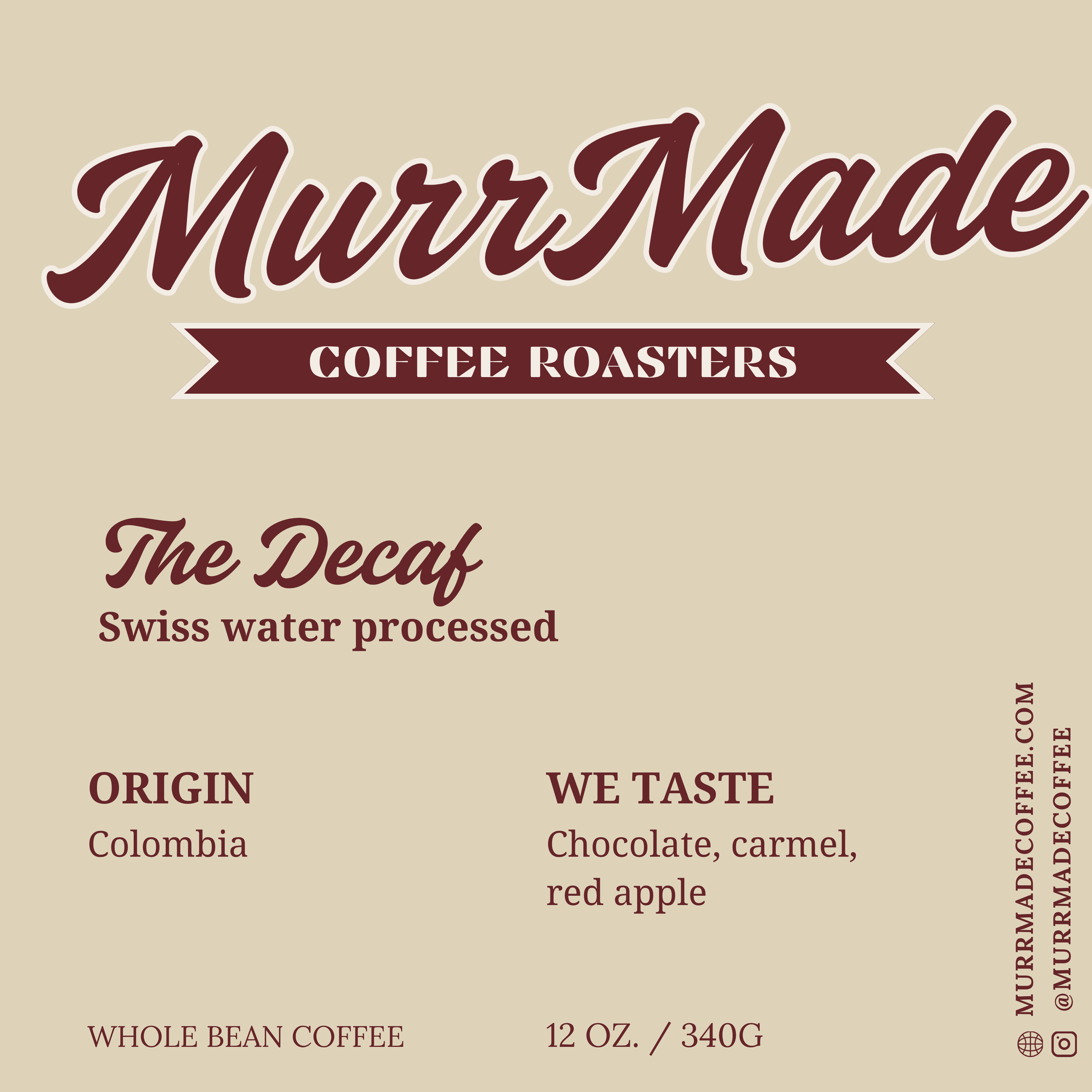
Tasting Notes: Chocolate, Caramel, Red Apple
Process: Swiss Water Decaf
Colombia Decaf Coffee Beans
When someone switches to decaf, it’s clear that there’s an attachment to the flavor of coffee that they can never give up. Now, it’s easier than ever to have delicious caffeine-free coffee with all the characteristics of beloved origin terroirs. With constant innovations and improvements in decaf processing methods decaf drinkers can enjoy their coffee without sacrificing quality or flavor experience.
That means a washed Colombian coffee like this one from Antioquia can shine, even as a decaf. Roasters will detect enticing notes of dark chocolate, caramel, roasted almond, and red apple in a heavy-bodied cup with mild acidity. The regional blend was sourced from smallholder farmers that supply coffee to a select group of Colombian coffee exporters.
What is the Swiss Water® Decaf Process?
The Swiss Water Process, developed in Switzerland, is a natural, chemical-free way to decaffeinate coffee. Swiss Water boasts a process that is not only clean and natural, it also keeps the original flavor of the coffee intact.
The Swiss Water process starts by soaking green coffee beans in pure water to create a proprietary Green Coffee Extract (GCE). The GCE holds all the coffee’s soluble compounds. The extract is then passed through activated carbon filters to remove caffeine, leaving behind a flavorful, caffeine-free solution.
When new batches of green coffee beans are added to the GCE and soaked for 8–10 hours, the caffeine naturally moves out of the beans without stripping away their taste. The extract is continuously refreshed through carbon filtration, ensuring the beans keep their original characteristics.
Thanks to this careful process, Swiss Water decaf removes 99.9% of the caffeine while preserving the coffee’s original profile—acidity, flavors, and complexity. It’s a decaf that actually tastes like coffee, making it a great option for anyone looking to cut back on caffeine without sacrificing quality. Learn more about how decaf coffee is made here.
About Colombia Green Coffee Beans
Over half a million families dedicate their livelihoods to producing unroasted Colombia green coffee on small farms that dot the country’s volcanic mountain ranges. As the world’s third-largest producing country, the volume, quality, and variety that comes out of Colombia year-round is staggering.
According to the USDA, the overall production growth of 6.1 percent for the 2023/2024 harvest remains modest due to reduced coffee renovation areas in 2022, driven by high coffee prices, leading to lower productivity. Dry conditions also negatively impacted young coffee trees and lower-altitude plantations, increasing coffee borer infestations and the production of smaller, underdeveloped beans. Colombia currently has around 840,000 hectares of coffee farms, mostly smallholder-run, with two peak harvest periods: the main harvest from October to December and the secondary “mitaca” harvest from April to June, primarily in the central coffee region.
Coffee from Colombia is never dull, and with 16 coffee-producing regions along three mountain ranges and two harvests each year, Colombia always has fresh coffee on hand. Read more in our Colombian Coffee Origin Report.
ONLINE GIFT CARD FOR WEBSITE ONLY
Gift cards are delivered by email and contain instructions to redeem them on our website.

Tasting Notes: Vanilla, Nutty, Strawberry
Process: Honey Processed